
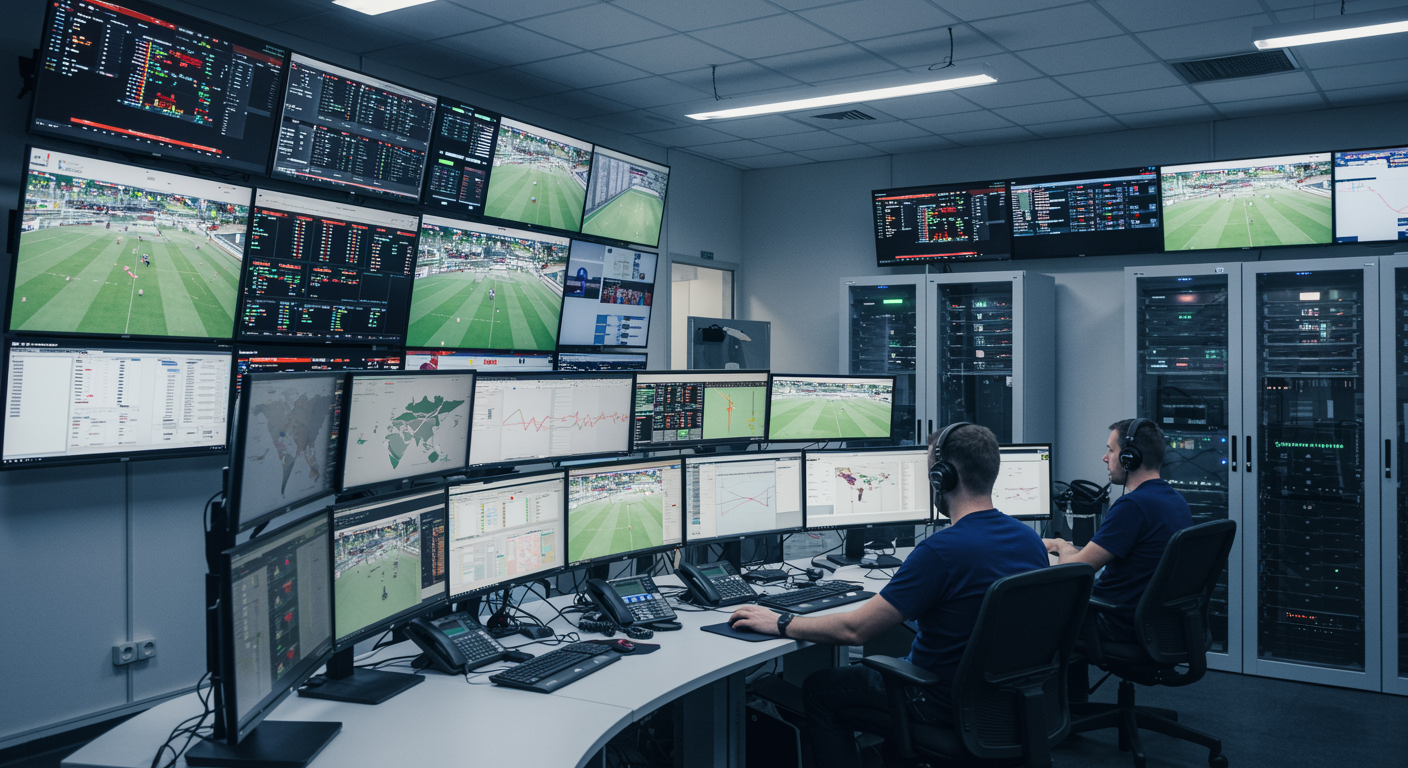
Live betting has transformed the sports wagering landscape in India, allowing bettors to place wagers during ongoing matches. However, latency issues create critical vulnerabilities that affect both user experience and market integrity. When live betting platforms experience delays in data transmission, these gaps can be exploited by sophisticated actors who gain unfair advantages through faster information sources.
India’s unique telecommunications infrastructure and regulatory environment amplify these latency challenges. High-profile incidents during IPL matches and international cricket tournaments have demonstrated how broadcast delays can be systematically exploited, leading to significant financial losses for bookmakers and creating unfair betting conditions that undermine sports integrity across the subcontinent.
Defining Latency in Live Betting: Technical Roots and India-Specific Dynamics
Latency in live betting refers to the time delay between when an event occurs on the field and when that information reaches various distribution channels. These delays create information asymmetries that can be exploited for unfair advantage, particularly in India where infrastructure limitations compound natural transmission delays.
The multi-hop routing required to reach remote areas in India significantly increases latency compared to developed markets. Traditional satellite uplinks, terrestrial broadcasting networks, and internet infrastructure all introduce cumulative delays that create exploitable windows for market manipulation.
Understanding different types of latency helps explain why certain platforms perform better than others in the Indian market. From traditional TV broadcasts to modern streaming applications, each delivery method introduces distinct delay patterns that affect betting decisions and market dynamics.
| Latency Type | Description | Typical Delay (seconds) | Impact on Betting | India Context |
|---|---|---|---|---|
| TV Broadcast | Traditional satellite/cable transmission | 8-15 | High exploitation risk | DTH delays amplified by distance |
| OTT Streaming | Internet-based video delivery | 20-45 | Very high risk window | Bandwidth constraints worsen delays |
| Mobile Apps | Direct sports data feeds | 3-8 | Moderate risk exposure | 4G/5G coverage inconsistent |
| Live Data Feeds | Professional sports data services | 1-3 | Lowest latency option | Premium services costly for operators |
| Stadium Attendance | Physical presence at venue | 0-1 | Enables pitchsiding | Security measures increasing |
Signal Pathways: From Stadium to Screen
The journey of live sports signals from Indian stadiums to end users involves multiple transmission hops that accumulate delay. Initial capture by stadium cameras feeds into production trucks, then travels via satellite uplinks to broadcasting centers, where additional processing and regional distribution add further latency.
India’s geographic challenges compound these delays, as signals often route through Mumbai or Delhi before reaching smaller cities. Internet infrastructure limitations mean that rural areas experience significantly higher latency than urban centers, creating uneven betting conditions across different regions of the country.
Comparison of Latency Across Indian Sports Platforms
Different platforms serving the Indian market exhibit varying latency characteristics based on their technical infrastructure and delivery methods. Understanding these differences helps explain why certain services are preferred by serious bettors who prioritize speed over other features.
| Platform | Typical Delay | Strengths | Weaknesses |
|---|---|---|---|
| Star Sports TV | 10-12 seconds | Reliable, consistent quality | High latency, regional variations |
| Disney+ Hotstar | 25-40 seconds | Multiple device support | Very high latency, buffering issues |
| JioCinema | 20-35 seconds | Free access, good mobile optimization | Network dependent delays |
| Sony LIV | 15-30 seconds | Lower latency than competitors | Limited sports coverage |
How Latency Enables Market Manipulation and Pitchsiding in India
Market manipulation through latency exploitation has become a sophisticated operation in India’s betting landscape. Criminal networks have developed systematic approaches to capitalize on broadcast delays, particularly during high-profile cricket matches where betting volumes reach peak levels.
The practice of pitchsiding involves placing individuals with fast communication links at sporting venues to relay real-time information to betting syndicates. This creates an unfair advantage over regular bettors who rely on delayed broadcasts, enabling guaranteed profits through risk-free arbitrage opportunities.
Recent investigations by Indian law enforcement have uncovered extensive networks operating across multiple cities during IPL seasons. These operations demonstrate the scale and sophistication of latency-based market manipulation, involving coordination between stadium operatives, technical specialists, and international betting syndicates.
- Stadium operatives establish positions with clear views of the action and secure communication channels to relay information instantly to betting coordinators outside the venue.
- Technical teams monitor multiple broadcast feeds to identify which platforms have the longest delays, creating larger windows for exploitation during critical match moments.
- Betting coordinators place large wagers on outcomes they already know, using the delay window to guarantee profits before markets can react to actual events.
- International connections allow profits to be laundered through offshore accounts, making detection and prosecution more difficult for Indian authorities.
- Sophisticated timing systems ensure bets are placed at optimal moments to avoid suspicion while maximizing the exploitation window available through broadcast delays.
- Network resilience is maintained through multiple backup communication methods and distributed operations across different locations to minimize risk of complete shutdown.
Legal and Regulatory Landscape: Combatting Latency Exploitation
Indian authorities have recognized the serious threat posed by latency-based market manipulation and have implemented various measures to combat these practices. Coordination between sports governing bodies, law enforcement, and technology providers has intensified following several high-profile cases.
The legal framework continues to evolve as regulators adapt to new technological challenges. Recent legislative developments have strengthened penalties for sports betting fraud while providing clearer guidelines for legitimate operators seeking to implement protective measures.
- ICC and BCCI have implemented enhanced surveillance systems at major venues, including signal detection equipment to identify unauthorized communication devices used by pitchsiders.
- Police anti-corruption units now receive specialized training in technological aspects of betting fraud, enabling more effective investigation and prosecution of complex cases.
- Regulatory frameworks are being updated to require betting operators to implement minimum latency standards and real-time monitoring systems for suspicious betting patterns.
- International cooperation agreements facilitate information sharing with offshore jurisdictions to track money flows and identify key players in transnational manipulation networks.
- Stadium security protocols have been strengthened to restrict access to areas with optimal viewing positions and to detect communication equipment that might be used for pitchsiding operations.
Latency Impact on User Experience, Odds Updates, and Bet Acceptance
Streaming latency creates significant frustration for live betting users in India, particularly when they witness delayed reactions to events they’ve already seen concluded. This disconnect between visual information and betting market responses leads to confusion and missed opportunities that damage user confidence in live betting platforms.
Odds update mechanisms struggle to maintain synchronization across different data sources, creating inconsistent user experiences. When betting apps receive faster data feeds than the video streams users are watching, it creates situations where markets appear to move inexplicably, undermining trust in platform fairness.
Bet acceptance delays compound these problems by creating uncertainty about whether wagers will be honored at displayed odds. Market suspensions triggered by latency-induced volatility further interrupt the betting experience, particularly during crucial moments when users most want to place wagers.
The cumulative effect of these technical issues has led many Indian bettors to develop adaptive strategies, though these workarounds often involve accepting suboptimal betting conditions. Premium users increasingly demand platforms that can provide synchronized experiences between video feeds and betting markets.
| User Action | Latency Effect | Pros | Cons |
|---|---|---|---|
| Placing Quick Bets | Confirmation delays create uncertainty | Time to reconsider decisions | Missed opportunities, odds changes |
| Watching Live Streams | Video lags behind betting markets | Less impulsive betting | Confused market movements |
| Market Monitoring | Delayed odds updates | Smoother price movements | Outdated information for decisions |
| Cash Out Options | Delayed value calculations | Prevents panic decisions | Missing optimal cash out timing |
Odds Update Mechanisms: Technical Bottlenecks in India
Indian betting platforms rely on various technical protocols to deliver odds updates, with WebSocket connections being preferred for real-time communication. However, bandwidth limitations and network congestion during peak hours create bottlenecks that delay critical price updates, particularly affecting users on slower internet connections.
HTTP polling systems used by some platforms introduce additional delays as they require regular server requests rather than instant push notifications. These limitations are amplified in India’s mobile-first market, where users frequently experience network switching between 4G and 3G coverage areas that disrupt continuous data streams.
Examples of Bet Acceptance and Market Suspension Delays
Understanding the primary causes of bet acceptance delays helps users and operators identify where improvements are most needed. These issues significantly impact user satisfaction and platform credibility in India’s competitive betting market.
Market suspension mechanisms designed to protect against manipulation often trigger incorrectly due to latency-induced volatility. This creates situations where legitimate betting opportunities are unnecessarily restricted, frustrating users who are attempting to place fair wagers during normal market conditions.
- Network connectivity issues rank as the primary cause of bet acceptance delays, particularly affecting users in rural areas with inconsistent internet infrastructure and those switching between WiFi and mobile data connections.
- Server overload during high-traffic events like IPL finals creates systematic delays that affect all users simultaneously, often leading to complete platform outages during the most critical betting moments.
- Payment processing bottlenecks cause delayed bet confirmations even when odds are accepted, creating uncertainty about whether wagers are active and potentially leading to duplicate bet placement attempts.
- Risk management system triggers pause bet acceptance when unusual patterns are detected, often incorrectly flagging legitimate user behavior during volatile match situations or popular betting events.
Technological Solutions for Reducing Latency: Indian and Global Perspectives
Advanced streaming technologies offer promising solutions for reducing latency in live betting applications. Low-latency protocols like WebRTC and improved CDN architectures can significantly reduce delays, though implementation costs and technical complexity remain barriers for many Indian operators.
Bet synchronization tools that coordinate video feeds with betting markets represent a crucial innovation for improving user experience. These systems can automatically adjust content delivery timing to ensure users see events at roughly the same time as odds updates occur, creating more intuitive betting environments.
Application optimizations focused on the Indian market must account for diverse device capabilities and network conditions. Progressive enhancement strategies allow platforms to deliver premium experiences to users with high-speed connections while maintaining functionality for those with limited bandwidth or older devices.
- Edge computing deployment brings data processing closer to end users, reducing round-trip times and improving responsiveness for latency-sensitive applications like live betting in major Indian metropolitan areas.
- Adaptive streaming algorithms automatically adjust video quality and data transmission rates based on real-time network conditions, maintaining consistent user experiences across varying connection speeds and device capabilities.
- Multi-CDN strategies distribute content across multiple providers to optimize delivery routes and reduce dependency on single network infrastructure, particularly important given India’s fragmented internet landscape.
- Real-time data compression techniques reduce bandwidth requirements without sacrificing critical information, enabling faster transmission of odds updates and market data to users with limited connectivity.
- Predictive caching systems anticipate user behavior and pre-load critical betting data, reducing perceived latency during high-traffic events and improving overall platform responsiveness for Indian users.
Potential for Ultra-Low Latency Tech Adoption in India
The adoption of ultra-low latency technologies in India faces significant cost and infrastructure challenges that limit widespread implementation. While global operators can justify premium technology investments for major markets, Indian operators must balance advanced features against price-sensitive user bases and regulatory uncertainty.
However, competitive pressure and growing user sophistication are driving gradual adoption of improved technologies. Operators targeting premium segments are beginning to invest in latency reduction as a key differentiator, particularly for users who prioritize technical performance over cost considerations.
Major Challenges: Infrastructure, Regulation, and User Behaviour
India’s telecommunications infrastructure presents unique challenges for live betting latency reduction. The vast geographic distances, varied terrain, and inconsistent network quality across different regions create complex technical environments that require sophisticated solutions to deliver consistent user experiences.
Regulatory inconsistencies between different states and the evolving legal landscape create uncertainty for operators considering major technology investments. The lack of clear guidelines for acceptable latency standards or technical requirements makes it difficult to develop comprehensive solutions that satisfy both user needs and compliance requirements.
User behavior patterns in India reflect adaptation to existing technical limitations, but also create expectations that may be difficult to change. Many bettors have developed strategies that account for current latency levels, and dramatic improvements might require education and interface changes to realize their full potential.
Internet fragmentation across multiple service providers with varying quality levels complicates efforts to optimize for specific network conditions. What works well for users on premium fiber connections may fail completely for those relying on rural mobile networks during peak usage periods.
| Challenge | Description | Severity | India Market |
|---|---|---|---|
| Network Infrastructure | Inconsistent connectivity quality | High | Rural areas significantly affected |
| Regulatory Uncertainty | Unclear technical requirements | Medium | State-by-state variations complicate compliance |
| Cost Constraints | Limited budgets for technology upgrades | High | Price-sensitive market limits premium features |
| Device Diversity | Wide range of device capabilities | Medium | Budget smartphones dominate market |
| Bandwidth Limitations | Data cost and speed constraints | High | Users prioritize data efficiency over speed |
Behavioural Responses: How Bettors and Bookmakers Adapt
Indian bettors have developed sophisticated strategies to work within existing latency constraints, though these adaptations often involve accepting suboptimal conditions. Understanding these behavioral patterns helps operators design better solutions that address real user needs rather than theoretical technical problems.
Bookmakers have implemented risk management systems that account for latency-based vulnerabilities, though these measures sometimes penalize legitimate users. The balance between security and user experience remains a key challenge for operators seeking to prevent exploitation while maintaining competitive service quality.
- Time betting strategically around known delay patterns, placing wagers during stable periods rather than immediately after visible events to improve odds of acceptance at desired prices.
- Use multiple platforms simultaneously to compare latency characteristics and identify which services provide the fastest updates for different types of betting markets and sports.
- Monitor social media and live text updates alongside video streams to gain additional information sources that may be faster than broadcast feeds for critical match developments.
- Develop personal bankroll management strategies that account for the uncertainty created by bet acceptance delays, reducing stake sizes during high-latency periods to minimize risk exposure.
- Choose betting markets carefully, focusing on longer-duration events less affected by second-by-second latency rather than attempting to bet on rapidly changing situations during live play.
Broadcast Compliance and Content Safeguards
Broadcasting regulations in India require certain delay periods to allow for content moderation and compliance with decency standards. These regulatory delays compound technical latency issues, creating additional windows for exploitation that cannot be easily eliminated through technological solutions alone.
Event organizers increasingly implement their own delay systems to reduce manipulation risks, though these measures must be balanced against viewer experience expectations. The coordination between regulatory requirements and betting integrity measures continues to evolve as stakeholders seek optimal solutions.
Future Trends: Synchronicity, Integrity, and the Indian Betting Ecosystem
The future of live betting in India will likely be shaped by advances in artificial intelligence that can provide real-time synchronization between different data sources. AI systems capable of detecting and correcting latency discrepancies could create more consistent user experiences while reducing exploitation opportunities.
Low-latency data standards are emerging globally that could provide frameworks for Indian operators to implement more reliable and secure betting environments. These standardized approaches would reduce development costs while ensuring interoperability between different platforms and data providers.
Regulatory reform improvements are expected as authorities gain better understanding of technical challenges and develop more sophisticated frameworks for managing betting integrity. Future regulations may include specific latency requirements and technical standards that create clearer guidelines for operators while protecting consumers.
- Artificial intelligence integration for real-time latency detection and compensation, automatically adjusting content delivery timing to maintain synchronization between video streams and betting markets across different user connections.
- Blockchain-based integrity systems that provide transparent, tamper-proof records of event timing and bet placement, reducing disputes and increasing confidence in platform fairness and regulatory compliance.
- 5G network deployment enabling ultra-low latency applications that dramatically reduce delay windows, though adoption will be gradual and initially limited to major urban areas with premium service availability.
Opportunities for Safer, Fairer Betting in India
Enhanced transparency measures could build greater user confidence while making manipulation attempts more difficult to execute successfully. Real-time audit systems that track and publish latency metrics would allow users to make informed decisions about platform selection while encouraging operators to invest in improvements.
The development of ethical industry standards specifically designed for the Indian market could provide frameworks for balancing user experience, technical feasibility, and integrity protection. These standards would help legitimate operators differentiate themselves while making it more difficult for unscrupulous platforms to exploit technical vulnerabilities.