
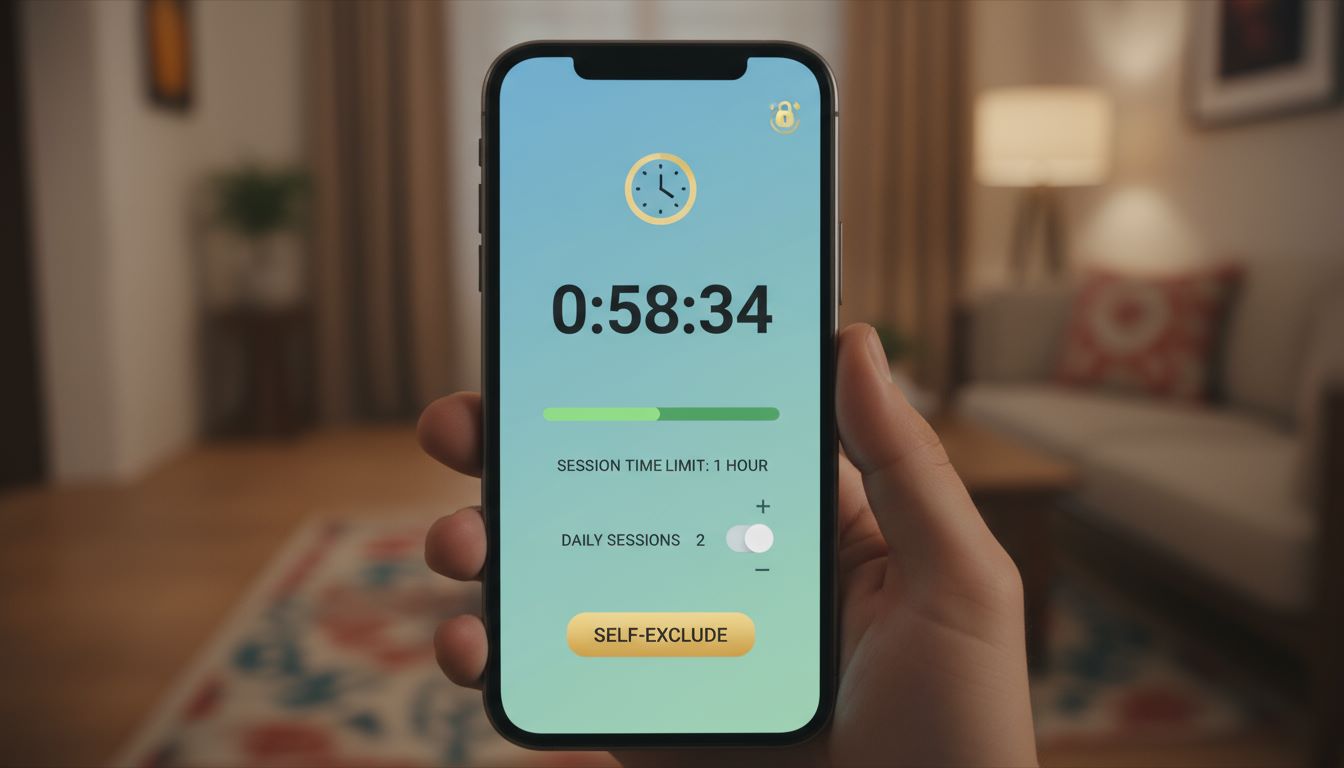
The Indian online gaming market has experienced unprecedented growth, with revenues projected to reach ₹290 billion by 2025. This explosive expansion brings both opportunities and challenges, making responsible gaming practices more crucial than ever for player well-being. As millions of Indians embrace digital gaming platforms, understanding how to maintain control over gaming habits becomes essential for sustainable entertainment.
Setting effective time limits represents one of the most powerful tools for responsible play, yet many Indian players lack practical guidance on implementation. This comprehensive guide provides actionable steps, platform-specific tools, and relevant legal context to help Indian gamers establish healthy gaming boundaries while navigating the evolving regulatory landscape.
Understanding Responsible Gaming in India
Responsible gaming encompasses a set of practices and policies designed to ensure that gaming remains a safe, enjoyable activity without causing financial, social, or psychological harm. In the Indian context, this concept has gained significant importance as regulatory frameworks evolve to protect players while supporting the growth of legitimate gaming operators. The principle extends beyond mere self-control to include platform accountability, regulatory compliance, and comprehensive player protection measures.
Indian law distinguishes between games of skill and games of chance, with different regulatory approaches applying to each category. Games of skill, such as rummy and fantasy sports, enjoy greater legal protection under current regulations, while games predominantly based on chance face stricter restrictions. This distinction directly impacts how responsible gaming tools are implemented and monitored across different platforms operating in India.
The importance of responsible gaming practices becomes particularly evident when considering the diverse socio-economic landscape of Indian players. With varying levels of digital literacy and financial awareness, comprehensive responsible gaming frameworks must address education, prevention, and intervention strategies tailored to Indian gaming habits and cultural contexts.
Regulatory Landscape and Legal Context
India’s regulatory framework for online gaming has undergone significant transformation, with multiple laws and regulations shaping responsible gaming requirements. The IT Rules 2021 and the proposed Online Gaming Act 2025 establish mandatory safeguards that platforms must implement to protect Indian players. These regulations require operators to provide comprehensive responsible gaming tools, including time limits, deposit controls, and self-exclusion options.
The regulatory emphasis on KYC verification and age verification processes ensures that only eligible players can access gaming platforms, while mandatory responsible gaming features help prevent problematic gaming behaviors before they develop into serious issues.
| Law/Regulation | Key Provision | Impact on Responsible Gaming |
|---|---|---|
| IT Rules 2021 | Mandatory KYC and age verification | Prevents underage gaming and enables tracking |
| Online Gaming Act 2025 | Comprehensive player protection framework | Mandates time limits and self-exclusion tools |
| GST Amendment 2023 | 28% tax on gaming transactions | Reduces platform incentives for excessive play |
| State Gaming Laws | Varied restrictions across states | Creates compliance requirements for operators |
| RBI Guidelines | Payment gateway regulations | Enables deposit limit enforcement |
Risks of Uncontrolled Gaming in India
Uncontrolled gaming behavior poses significant risks that extend beyond individual players to affect families and communities across India. Understanding these risks helps players recognize warning signs and motivates the adoption of preventive measures like time limits and other responsible gaming tools.
- Gaming addiction leading to neglect of work, family, and social responsibilities
- Financial losses exceeding personal budgets, potentially leading to debt and family hardship
- Mental health deterioration including anxiety, depression, and social isolation
- Legal complications from using unregulated offshore platforms
- Academic or professional performance decline due to excessive gaming
- Relationship strain and family conflicts over gaming habits
Time Limit Tools Available to Indian Players
Indian gaming platforms offer various time limit tools designed to help players maintain control over their gaming sessions. These tools range from basic session timers to sophisticated cooling-off mechanisms that can temporarily restrict account access. The effectiveness of these tools depends largely on proper configuration and consistent use, making player education essential for successful implementation.
Built-in platform tools typically include session reminders, daily time limits, and automatic logout features, while third-party applications provide additional monitoring and restriction capabilities. The combination of platform-based and independent tools creates a comprehensive framework for time management that can adapt to individual player needs and preferences.
Recent regulatory developments have enhanced the availability and functionality of time limit tools on Indian platforms. Operators now face mandatory requirements to provide prominent, easily accessible responsible gaming features, ensuring that all players can implement appropriate controls regardless of their technical expertise.
Understanding the strengths and limitations of different time limit tools enables players to select the most appropriate combination for their circumstances. While no single tool provides complete protection against problematic gaming, the strategic use of multiple tools creates effective barriers to excessive play.
| Tool | Description | Where to Find | Effectiveness | Limitations |
|---|---|---|---|---|
| Session Timer | Automatic logout after set duration | Account settings on most platforms | High for preventing extended sessions | Easy to restart after logout |
| Daily Time Limit | Maximum gaming time per 24-hour period | Responsible gaming section | Very high for daily control | Does not prevent multiple platform use |
| Reality Check Pop-ups | Regular reminders of gaming duration | Automatic feature on regulated platforms | Medium for awareness building | Easily dismissed without action |
| Third-party Apps | Independent time tracking and blocking | Google Play Store, App Store | High for comprehensive monitoring | May not work with all gaming apps |
| Cooling-off Periods | Temporary account suspension | Customer support or account settings | Very high for breaking gaming patterns | May require customer support contact |
| Device-level Controls | Phone or computer time restrictions | Device settings, parental controls | High for comprehensive blocking | Affects all device usage |
Platform-Specific Time Limit Features
Major gaming platforms operating in India have implemented sophisticated time limit features tailored to local regulatory requirements and player preferences. Platforms like 888Starz provide comprehensive session management tools that allow players to set hourly, daily, and weekly time limits with customizable reminder intervals. These features integrate seamlessly with the platform’s user interface, ensuring that responsible gaming tools remain accessible without disrupting the gaming experience.
Parimatch and Bet365 have developed advanced reality check systems that provide detailed gaming statistics alongside time limit enforcement. Players can access comprehensive reports showing their gaming patterns, helping them make informed decisions about appropriate time limits. These platforms also offer flexible cooling-off options, allowing players to temporarily suspend their accounts for periods ranging from 24 hours to several months.
Indian-specific features on international platforms include integration with local payment systems for deposit limit coordination and compliance with state-level gaming regulations. Many platforms now provide location-based responsible gaming tools that adapt to the specific legal requirements of different Indian states, ensuring that players receive appropriate protection regardless of their geographical location.
Independent Tools and Self-Regulation Strategies
External applications and self-regulation strategies provide additional layers of protection beyond platform-specific tools. These independent solutions offer comprehensive monitoring across multiple gaming platforms and can adapt to individual gaming patterns and risk factors. Successful implementation requires commitment to consistent use and honest self-assessment of gaming habits.
Creating effective self-regulation strategies involves combining technological tools with behavioral modifications and support systems. The most successful approaches incorporate family involvement, professional guidance when needed, and regular review and adjustment of gaming limits based on changing circumstances.
- Download reputable time management apps like RescueTime or Screen Time to monitor all digital activities including gaming
- Set up device-level parental controls on your smartphone and computer to enforce gaming time restrictions
- Create a written gaming schedule with specific time slots and stick to it regardless of winning or losing streaks
- Establish accountability partnerships with family members or friends who can monitor your gaming habits
- Use website blocking software like Cold Turkey or FocusMe during designated non-gaming hours
- Implement a “cooling-off” ritual such as meditation or physical exercise before and after gaming sessions
Step-by-Step: How to Set Time Limits
Setting effective time limits requires a systematic approach that considers individual gaming patterns, financial circumstances, and personal responsibilities. The process begins with honest self-assessment and continues with careful configuration of available tools across all gaming platforms. Most Indian gaming platforms have standardized their responsible gaming interfaces, making the setup process relatively consistent across different operators.
Successful time limit implementation involves not just initial setup but ongoing monitoring and adjustment based on changing circumstances. Players should regularly review their gaming patterns and modify limits as needed to maintain effective control over their gaming habits. The following step-by-step process ensures comprehensive protection across all gaming activities.
Recent regulatory changes have made time limit tools more prominent and accessible on Indian platforms, with many operators now requiring players to set initial limits during account registration. This proactive approach helps prevent problematic gaming behaviors before they develop into serious issues.
- Log into your gaming platform account and navigate to the “Responsible Gaming” or “Account Settings” section, typically found in the main menu or user profile area
- Locate the “Time Limits” or “Session Management” option and select your preferred limit type (session, daily, weekly, or monthly)
- Set realistic time limits based on your schedule and responsibilities, starting with conservative limits that you can adjust upward if needed
- Configure reality check reminders to appear at regular intervals (recommended every 30-60 minutes) to maintain awareness of gaming duration
- Enable automatic logout features to enforce your time limits without requiring manual intervention when limits are reached
- Set up cooling-off periods for situations when you feel tempted to exceed your limits, with minimum periods of 24 hours for effectiveness
- Document your settings and review them monthly to ensure they remain appropriate for your current circumstances and gaming patterns
Troubleshooting Common Issues
Players frequently encounter technical and behavioral challenges when implementing time limits, with the most common issues being limit bypass attempts and platform non-compliance. Technical problems often stem from outdated browser settings, mobile app versions, or conflicts with other device software. Most issues can be resolved through platform customer support or by updating applications to the latest versions.
Behavioral challenges present more complex problems, particularly when players attempt to circumvent their own limits through multiple accounts or offshore sites. These behaviors indicate that time limits alone may be insufficient, and additional support resources or professional help may be necessary. Recognizing these patterns early enables more effective intervention and prevents escalation to more serious gambling problems.
Beyond Time Limits: Holistic Responsible Gaming
Effective responsible gaming extends far beyond time limits to encompass comprehensive player protection strategies including deposit limits, wager caps, and loss limits. These complementary tools work together to create multiple barriers against problematic gaming behaviors, addressing both time-based and financial risk factors. The most successful responsible gaming approaches combine several different types of limits and controls.
Deposit limits prevent players from adding more money to their accounts than predetermined amounts over specific time periods, while wager caps restrict the maximum amount that can be bet on individual games or events. Loss limits automatically suspend gaming activity when predetermined loss thresholds are reached, providing important financial protection for players who may lose track of their spending during gaming sessions.
Modern responsible gaming frameworks also emphasize the importance of player education and awareness-building activities. Many platforms now provide comprehensive resources about probability, house edges, and the mathematical realities of gaming, helping players make more informed decisions about their gaming activities and risk management strategies.
Self-Exclusion and Cooling-Off Periods
Self-exclusion and cooling-off periods represent the most powerful tools available for players who need temporary or permanent breaks from gaming activities. These features provide essential circuit-breakers that can prevent minor gaming problems from escalating into serious addiction or financial hardship.
| Feature | Time Limit | Self-Exclusion | Cooling-Off |
|---|---|---|---|
| Duration | Minutes to hours per session | 6 months to permanent | 24 hours to 6 weeks |
| Reversibility | Immediately adjustable | Cannot be reversed early | May be extended but not shortened |
| Best Use Case | Daily gaming management | Serious gaming problems | Temporary break needed |
| Account Access | Limited gaming access | Complete account suspension | Complete gaming suspension |
Support Resources for Problem Gamblers
India has developed an expanding network of support resources for players experiencing gaming-related problems, including dedicated helplines, counseling centers, and specialized treatment programs. The National Institute of Mental Health and Neurosciences (NIMHANS) provides comprehensive addiction treatment services, while organizations like Gamblers Anonymous India offer peer support groups in major cities across the country.
Several NGOs focus specifically on gambling addiction recovery, providing free counseling services, family support programs, and financial counseling for individuals struggling with gaming-related debt. Many of these organizations also offer online support groups and resources, making help accessible to players regardless of their location within India.
Legal and Compliance Updates (2023–2025)
The regulatory landscape for online gaming in India has undergone significant transformation between 2023 and 2025, with new laws directly impacting how time limits and other responsible gaming tools are implemented and enforced. The introduction of comprehensive federal regulations has standardized responsible gaming requirements across all licensed platforms, while increased GST rates have altered the economic incentives for both operators and players.
These regulatory changes have enhanced player protection significantly, with mandatory cooling-off periods, standardized self-exclusion processes, and improved cross-platform coordination to prevent gaming limit circumvention. Compliance monitoring has become more sophisticated, with regular audits ensuring that platforms maintain effective responsible gaming systems.
The implementation of these new regulations has required platforms to upgrade their responsible gaming infrastructure, often resulting in more user-friendly interfaces and more comprehensive reporting tools for players. Many operators have exceeded minimum regulatory requirements, viewing robust responsible gaming features as competitive advantages in the evolving Indian market.
| Regulation | Year | Key Change | Implication for Time Limits |
|---|---|---|---|
| IT Rules Amendment | 2023 | Enhanced KYC requirements | Improved tracking and enforcement capability |
| GST Rate Increase | 2023 | 28% tax on gaming transactions | Natural deterrent to excessive gaming |
| Online Gaming Act | 2024 | Mandatory responsible gaming tools | Standardized time limit features required |
| Cross-Platform Registry | 2024 | Shared self-exclusion database | Prevents limit circumvention across platforms |
| State Licensing Framework | 2025 | Decentralized regulation model | State-specific time limit requirements |
State vs. Federal Jurisdiction
The evolving relationship between state and federal jurisdiction over online gaming has created a complex regulatory environment that directly impacts how responsible gaming tools are implemented and enforced. While federal regulations establish minimum standards for player protection, individual states retain significant authority to impose additional requirements or restrictions based on local conditions and preferences.
This decentralized approach has resulted in variations in time limit requirements across different Indian states, with some jurisdictions mandating stricter controls than others. Players and operators must navigate this complex landscape carefully, ensuring compliance with both federal standards and applicable state-level regulations to avoid legal complications.
Expert Tips for Long-Term Responsible Play
Developing sustainable responsible gaming habits requires ongoing attention to both behavioral patterns and environmental factors that influence gaming decisions. Expert practitioners recommend establishing comprehensive gaming policies that address not just time and money limits but also emotional states, social contexts, and life circumstances that may increase gaming risks.
Long-term success depends on regular self-assessment and willingness to adjust gaming limits based on changing circumstances such as income changes, stress levels, or life events. The most effective approaches combine multiple protective strategies while maintaining flexibility to adapt to evolving personal situations and gaming preferences.
Professional gambling counselors emphasize the importance of maintaining perspective on gaming as entertainment rather than investment, recognizing warning signs of problematic gaming behaviors, and seeking support when gaming begins to negatively impact other areas of life. Early intervention is consistently more effective than waiting until gaming problems become severe.
- Establish a comprehensive gaming budget that never exceeds 5% of your disposable income and stick to it regardless of wins or losses
- Create pre-gaming routines that include reviewing your current financial situation and emotional state before starting any gaming session
- Develop alternative entertainment activities to prevent gaming from becoming your primary leisure activity
- Schedule regular gaming breaks lasting at least one week every month to maintain perspective and prevent habit formation
- Keep detailed records of your gaming activities including time spent, money wagered, and emotional states to identify concerning patterns
- Build a support network of family and friends who understand your gaming limits and can provide accountability when needed
- Regularly educate yourself about gaming mathematics and probability to maintain realistic expectations about outcomes
Building a Personal Responsible Gaming Policy
Creating a written personal responsible gaming policy provides a structured framework for maintaining long-term control over gaming activities while ensuring that gaming remains an enjoyable form of entertainment. This policy should address all aspects of gaming behavior including time limits, financial limits, emotional triggers, and decision-making protocols for various scenarios.
The most effective personal policies combine strict rules with flexible guidelines that can adapt to changing life circumstances while maintaining core protective principles. Regular review and updating of these policies ensures they remain relevant and effective over time, while written documentation provides accountability and helps maintain commitment during challenging periods.